













Having a loss to avoid paying taxes might sound appealing but it’s not so good for the financial well-being of the business. Get instant access to lessons taught by experienced private equity pros and bulge bracket investment bankers including financial statement modeling, DCF, M&A, LBO, Comps and Excel Modeling. He’s currently a VP at KCK Group, the private equity arm of a middle eastern family office.
- This can disadvantage investors or stakeholders that make decisions based on it.
- Whether that’s by increasing sales, eliminating redundancies, or decreasing expenses, you should be looking for the next big cost-saving measure to free up valuable cash flow.
- Get instant access to lessons taught by experienced private equity pros and bulge bracket investment bankers including financial statement modeling, DCF, M&A, LBO, Comps and Excel Modeling.
- So, although a business does not pay cash in exchange for its expenses or receive cash for revenues, it will still include them when calculating its accounting profit.
- Explicit costs include things like raw materials, wages, lease payments, and utilities.
Taxable profit is the value used for tax declaration after adjusting accounting profit. To calculate the value, the company needs to alter accounting profits that are allowed under accounting standards and tax law. Companies often choose to supplement accounting profit with their own subjective take on their profit position.
What is Accounts Receivable Collection Period? (Definition, Formula, and Example)
For example, let’s say you have a boot store that generates $100,000 in annual revenue. Once you take out the cost of the leather, you have $80,000 (this is your gross profit). Similarly, due to different financial reporting frameworks, such as GAAP. IFRS, etc. the accounting profits of the same business may be different when using different financial reporting frameworks, thus, making the comparison even more difficult. Thirdly, accounting profit is critical in securing loans from financial institutions. Unlike accounting profit, underlying profit can be subjective and is based on one’s own opinion about what the true earnings should be for a company.
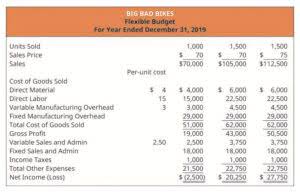
Gross profit is your revenue minus your cost of goods sold (COGS), which includes raw materials. You calculate the gross profit margin by dividing gross profit by revenue. For example, your boot business looks at the retail price of its product and subtracts the cost of materials and labor to produce it. Accounting Profit refers to the net profit or the income earned by the firm, calculated by subtracting the total expenses from the total revenue. Businesses can calculate accounting profit by deducting their explicit expenses from their revenues. Explicit expenses consist of all expenses that businesses can identify and measure.
What is accounting profit?
If the company’s only overhead was a monthly employee expense of $5,000, its operating profit would be $3,000, or ($8,000 – $5,000). For example, if a person invested $100,000 to start a business and earned $120,000 in profit, their accounting profit would be $20,000. Economic profit, however, would add implicit costs, such as the opportunity cost of $50,000, which represents the salary they would have earned if they kept their day job. As such, the business owner would have an economic loss of $30,000 ($120,000 – $100,000 – $50,000).
- Having a loss to avoid paying taxes might sound appealing but it’s not so good for the financial well-being of the business.
- The main drawback of the equations for profit is that they do not provide a complete picture of a company’s financial situation.
- Therefore, it is necessary to know the difference between these profits and accounting profits.
- Implicit costs are the money a company loses by using an asset it owns instead of selling or renting it to customers.
- Explicit costs include wages, leases, utilities, and the cost of raw materials while implicit costs include any opportunity costs, such as the loss of interest on an investment.
- The amount left with the firm after deducting all the expenses and tax for the year is referred to as net profit.
On the other hand, economic profit incorporates implicit costs that sometimes not recorded on a general ledger but still impact the net profitability of a decision. Economic profit is a form of profit that is derived from producing goods and services while factoring in the alternative uses of a company’s resources. It deducts explicit costs from revenue and includes the opportunity costs incurred during that period of time. Implicit costs, which are typically the costs of a company’s resources, are also part of the equation. Net profit (aka net income) is the final profit figure, calculated by subtracting all expenses from revenue. Continuing with the above example, say your operating profit is $5 million, but you have $1 million in other expenses, such as taxes and interest.
Subtract costs from revenue.
Be sure to consider how established most businesses in your industry are before you jump to any conclusions. For example, if a building is purchased for $100,000, and the next year would be worth $200,000 (but not sold) there is no increase in profit as there is no explicit transaction. Profit is a widely monitored financial metric that is regularly used to evaluate the health of a company. A review of the systems in place will be necessary to correct these problems and save the business from financial ruin.

Accounting profit, also referred to as financial profit or bookkeeping profit, is a company’s net income, or total revenue minus explicit costs. Accounting profit is used to assess a company’s performance and compare its financial position to competitors. To get an accurate profit formula calculation, a company must include every expense as part of the total. This includes things like payroll, utilities, inventory management costs, administrative costs, and shipping. Every line item in your accounting ledger that is an expense must factor into your total expenses line item. Profit margins are percentages that help measure the profitability of a business and come in different forms, such as gross profit margin, operating profit margin, and net profit margin.
Definition of Accounting Profit
Economic profit is based on theoretical principles while accounting profit uses accounting principles. As such, accounting profit is the true form of profitability while economic profit is derived from assumptions and estimates. For example, the implicit costs could be the market price a company could sell a natural resource for versus using that resource.
It is most useful for understanding how much is being earned from the sale of goods and services, before administrative and financial costs are subtracted. The second type of profit is operating profit, which is derived by subtracting all operating expenses from the gross margin. This is a good measure accounting profits are calculated based upon: of the profitability of a firm’s core operations, prior to taxes and financing costs. The final type of profit is net profit, which is derived by subtracting all taxes and financing costs from operating expenses. It represents the most complete measure of the profitability of a business.